Fence installation cost in Stark County, Ohio (2026)
What a new fence costs in Stark County in 2026 by material, plus permits, the Ohio frost line, property lines, and how to hire right.
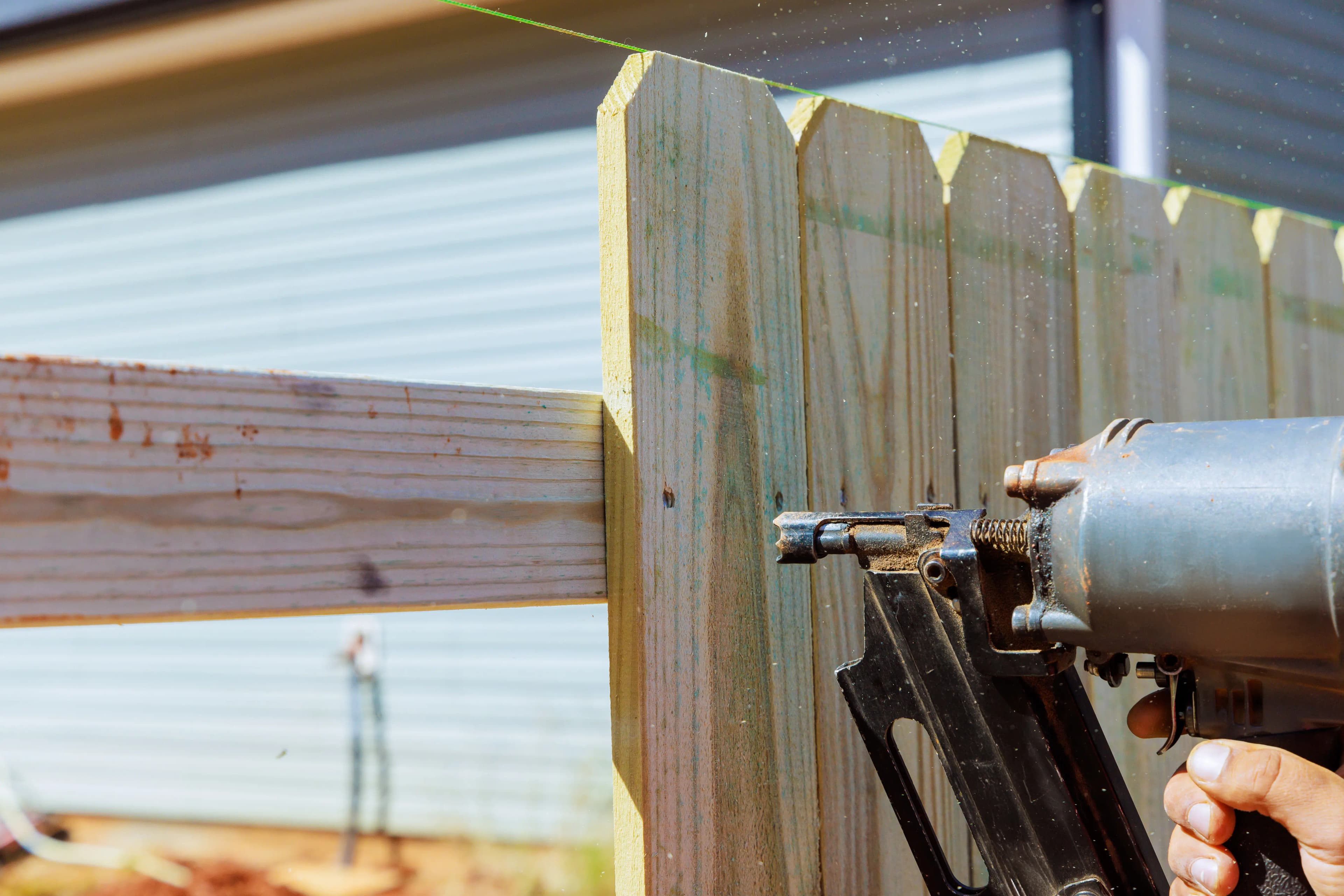
A new fence is one of the few home projects you see and use every single day. It marks your line, keeps the dog in, gives the patio some privacy, and quietly shapes how the whole backyard feels. It is also a project where the price swings more than most homeowners expect, because two yards on the same Canton street can come in thousands of dollars apart depending on material, length, slope, and how many gates you want.
This guide lays out what fencing actually costs in Stark County in 2026, what drives the number up or down, and the local realities — permits, property lines, and the Ohio frost line — that decide whether the job is done right. Every price here is a typical installed range pulled from current 2025–2026 cost data, not a quote. Your yard sets the final figure.
What a fence costs in 2026, by material
Installed cost is the number that matters: materials plus labor, posts set, gates hung, old fence hauled off if needed. National 2026 data from cost aggregators like HomeGuide and Angi clusters into these ranges per linear foot. Stark County labor tends to sit at or slightly below the national middle, so plan with the ranges below and expect a real quote to land inside them.
| Material | Installed cost per linear foot | Typical lifespan | Maintenance | The look |
|---|---|---|---|---|
| Chain-link | $10–25 | 15–25 years | Very low; occasional rust check | Functional, see-through, budget-first |
| Wood (privacy) | $20–45 | 15–25 years with upkeep | Higher; stain or seal every few years | Warm, classic, fully private |
| Aluminum / ornamental | $30–60 | 30+ years | Very low; rust-proof | Elegant, open, decorative |
| Vinyl / PVC | $30–60 | 25–30+ years | Low; rinse occasionally | Clean, uniform, low-fuss |
| Composite | $40–80 | 25–30+ years | Low; no staining | Wood-look without the upkeep |
*Ranges from HomeGuide and Angi 2025–2026 data.*
For a sense of the total: an average Stark County backyard runs roughly 150 to 200 linear feet of fence. At those lengths, a wood privacy fence often lands in the $2,500–$4,700 range, vinyl closer to $4,500–$6,750, and chain-link can come in under $2,500. Longer runs, taller panels, and more gates push every one of those higher.
Chain-link: the budget workhorse
Chain-link is the most affordable option in 2026, typically $10–25 per linear foot installed for a standard residential height. It does one job well: a durable, low-maintenance boundary that keeps pets and kids in the yard. Galvanized is the baseline; a black or green vinyl coating costs a little more and disappears into the landscape far better than bare silver. It is not private, and it will not win any design awards, but for a back lot line or a dog run, the value is hard to beat.
Wood: warm, private, and the most common choice
A wood privacy fence is what most people picture — solid cedar or pressure-treated pine, six feet tall, no gaps. Expect roughly $20–45 per linear foot installed, with privacy-grade builds clustering in the upper half of that. Wood gives you full privacy and a warm, classic look at a mid-range price. The trade-off is upkeep: to get 15 to 25 years out of it in Ohio's freeze-thaw climate, plan to stain or seal it every few years. Skip that, and weathering shows fast.
Vinyl: low-maintenance and increasingly popular
Vinyl, also called PVC, runs about $30–60 per linear foot installed. It costs more up front than wood but asks almost nothing of you afterward — no staining, no painting, just a rinse with the hose when it gets dusty. It holds its color, resists rot and insects, and commonly lasts 25 to 30 years or more. For homeowners who want privacy without a maintenance chore, vinyl is often the better long-run value despite the higher sticker.
Aluminum and ornamental: elegant and open
Aluminum, sometimes sold as ornamental or wrought-iron-style, typically runs $30–60 per linear foot installed. It will not give you privacy — the pickets are spaced — but it delivers an elegant, decorative line that suits front yards, garden borders, and pool enclosures. It is rust-proof, essentially maintenance-free, and routinely lasts 30 years or more. If you want the look of iron without the rust and weight, aluminum is the modern answer.
Composite: wood-look without the upkeep
Composite fencing, blending recycled wood fiber and plastic, is the premium tier at roughly $40–80 per linear foot installed, with high-end systems running higher. You get the warm look of wood and the low maintenance of vinyl in one product: no staining, no rot, decades of life. It is the most expensive option for an average yard, so it tends to appeal to homeowners prioritizing long-term, hands-off ownership over the lowest entry price.
What drives your total price
Two fences in the same material can be priced very differently. The biggest levers:
- Linear feet. The single largest factor. Measure your perimeter — every additional foot adds material and labor.
- Height. A six-foot privacy fence costs more per foot than a four-foot one, and an eight-foot run costs more again. More panel, more posts, more labor.
- Gates. Each gate is a small assembly of its own, with hardware, hinges, and a latch. A walk gate adds a few hundred dollars; a wide drive gate adds more. Budget per gate, not per foot.
- Terrain and slope. A flat, clear yard is the cheapest to fence. Slopes require stepped or racked panels, and rocky or root-bound ground slows post digging — both add labor.
- Post depth and the Ohio frost line. This one is not optional in Ohio. Posts must be set deep enough to resist frost heave — the seasonal cycle where freezing ground shoves shallow posts up and out of line. The Residential Code of Ohio requires footings at least 32 inches deep, and many local codes call for fence posts to extend below the prevailing frost line, commonly 32 to 36 inches, with some jurisdictions requiring deeper. A pro who sets posts in concrete below the frost line is building a fence that stays straight; one who cuts that corner is building a fence that leans within a couple of winters.
- Old fence removal and grading. Tearing out and hauling away an existing fence, or leveling rough ground, is a separate line item worth asking about up front. If the job overlaps with regrading or new beds, some of the best landscapers in Canton handle fencing and hardscape together.
The Stark County permit and property-line reality
Here is the part out-of-town cost guides get wrong: there is no single, county-wide fence rule in Stark County. Permits and setbacks are set at the city or township level, so the requirements in Canton are not the same as Jackson Township, North Canton, or Massillon. You have to check your own jurisdiction.
A few things to sort out before anyone starts digging:
- Pull the right permit. Most Stark County municipalities require a zoning permit before you build or even replace a fence. The City of Canton, for example, requires one and sets height limits by yard — generally up to four feet in the front yard, six feet along the side, and eight feet in the rear. Your township or city may differ. A quick call to your local building or zoning department with your address settles it. Our Stark County building permits guide walks through who issues them and how the process works.
- Know your real property line. Fences belong on your land, not your best guess at the line. If your line is uncertain, a property survey is cheap insurance against an expensive dispute — or a fence you have to move. Find your pins before you commit to a layout.
- Mind setbacks and corner-lot rules. Some jurisdictions require the fence to sit a few inches inside the line, or limit height near a street corner for visibility. This is local — ask.
- Check HOA rules, if you have one. Many Stark County subdivisions have an HOA or deed restrictions that govern material, height, color, and style — sometimes more strictly than the city. Get written approval before you order anything. A good installer has seen these requirements before and will work to them.
Call before you dig: Ohio 811 is the law
Before a single post hole goes in, the dig site has to be marked for underground utilities — gas, electric, water, telecom. In Ohio this is not a courtesy; it is the law, and it is free.
Ohio law requires you to contact Ohio 811 (the Ohio Utilities Protection Service, OUPS) at least 48 working hours before you dig. Call 811 or 800-362-2764, or file online, and member utilities will mark their lines at no charge.
A reputable fence installer files this notice as a matter of routine and waits for the marks before digging. If a contractor offers to skip it, that is a red flag — hitting a gas or electric line is dangerous and expensive, and the homeowner can be on the hook. You can confirm the requirement directly at Ohio 811.
How to hire a fence installer who does it right
Good fencing work is straightforward, and so is spotting a pro who will deliver it. Look for these:
- A written, itemized estimate. It should spell out material, height, total linear feet, number of gates, post depth, old-fence removal, and cleanup. A real number on paper beats a friendly verbal guess every time.
- Licensing and insurance. Confirm the installer carries liability insurance and any license your municipality requires. Ask for proof; a professional hands it over without hesitation.
- The permit handled correctly. Clarify who pulls the zoning permit — you or them — and make sure it happens before work starts.
- 811 marked before digging. A pro files the Ohio 811 notice and waits for the locate. Build it into the conversation.
- Posts set below the frost line. Ask how deep the posts go and whether they are set in concrete. The answer should reference the local frost depth, not a shrug.
- A clear timeline and warranty. Know the start window, the rough duration, and what the labor warranty covers.
The simplest way to compare on these points is to get a few estimates side by side. On StarkPros you can describe your project once — perimeter, material, gates — and we route it to fence installers in Stark County so quotes come to you instead of you chasing them. Here is how it works, and you can browse local pros from the Canton page if you would rather start there.
Frequently asked questions
How much does a fence cost for an average Stark County yard? For a typical 150 to 200 linear feet, plan on roughly $2,500 to $4,700 installed for a wood privacy fence, $4,500 to $6,750 for vinyl, and under $2,500 for chain-link. Height, gates, and slope move the final number.
Do I need a permit to build a fence in Canton or my township? Usually, yes. Most Stark County jurisdictions, including the City of Canton, require a zoning permit before you build or replace a fence, and height limits vary by yard. Rules are local, so confirm with your own city or township building department before you start.
How deep do fence posts go in Ohio? Deep enough to clear the frost line so winter freeze-thaw cannot heave them. The Residential Code of Ohio sets a 32-inch minimum footing depth, and many local codes want fence posts below the prevailing frost line, commonly 32 to 36 inches, set in concrete. Your installer should know the local requirement.
What is the cheapest fence material? Chain-link, typically $10 to $25 per linear foot installed. It is durable and low-maintenance, just not private. Wood is the most affordable privacy option.
Which fence lasts the longest with the least upkeep? Aluminum, vinyl, and composite all routinely last 25 to 30-plus years with very little maintenance. Wood can last as long but only with regular staining or sealing in Ohio's climate.
Do I really have to call 811 before digging? Yes. Ohio law requires contacting Ohio 811 (OUPS) at least 48 working hours before any digging, and it is free. A reputable installer handles this and waits for utilities to be marked before setting posts.
Tagged:
Written by
StarkPros Editorial Team
Our team of local Ohio experts covering home services, auto, and wedding vendors across Stark County and the surrounding region. Every guide is reviewed by a local pro before publishing.
Ready to find a Stark County pro?
Get matched with the right local pros.
Real reviews from real Stark County neighbors. Free quotes in under two minutes.